
How do white roofs limit the effects of heat waves on buildings?
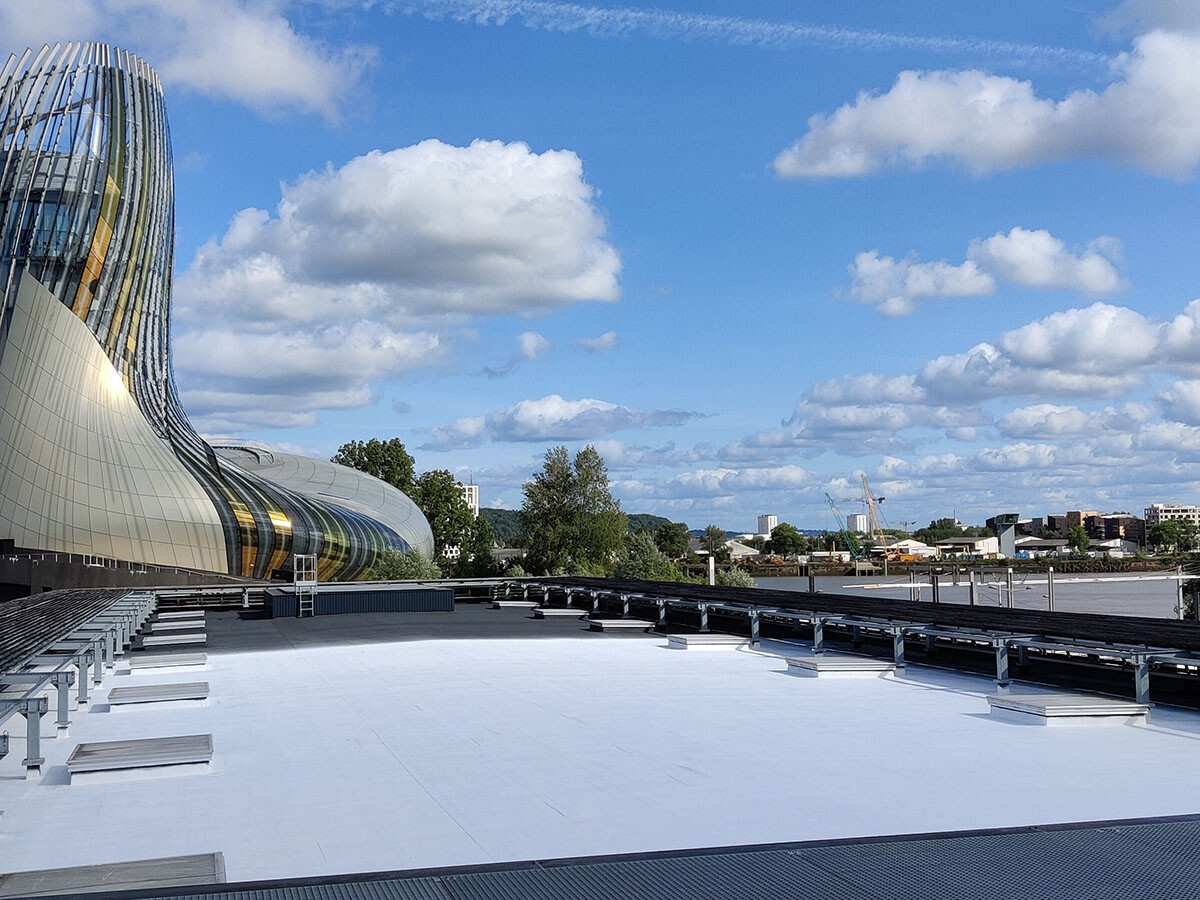
With temperatures exceeding 40°C every summer around the world, painting building roofs white is a sustainable solution for effectively combating the effects of heat. This technique has been used for centuries in countries around the Mediterranean and in South America. Demand is now skyrocketing in Europe and North America, where local governments and supermarkets are increasingly adopting it. Arkema, drawing on its expertise in high-performance materials and resins for paints, offers a range of coating solutions that are perfectly suited for these white roofs.
Reflective roofing, or “cool roofing”: in practical terms, this involves repainting a roof with white paint that has reflective properties, which deflects the sun’s rays. This is known as the albedo effect. When repainted white, dark roofs—which often become scorching hot in the summer—absorb less heat, helping to keep the interior of the building cool. According to various market players in France, the average temperature reduction in summer is -6 to -7°C, and if the building is air-conditioned, this represents an energy savings of about 40%.

Cool roofing to reduce the carbon footprint of buildings
Supported by government agencies in many countries, cool roofing offers a simple and eco-friendly solution to an increasingly urgent need in the era of scorching summers: maintaining a comfortable temperature inside buildings while reducing the need for air conditioning and the associated carbon footprint. It is commonly used on roofs, but also, increasingly, on walls and even— —on certain urban surfaces, where it helps improve albedo—that is, the surface’s ability to reflect solar energy relative to the amount received.
For this rapidly growing “white roofs” market, Arkema combines several coating technologies that ensure effective reflection of UV rays and, above all, the longevity of these white roofs.
Acrylic and PVDF coatings: the winning combination for durable white roofs
For several years, Arkema has been developing an “all-in-one” solution that combines the expertise of its various business segments to offer a unique combination on the market. The Group is the only player to possess both acrylic and PVDF technologies, enabling it to deliver the best performance in terms of reflective and thermal properties, applicability, and long-term durability.
This system is based on the combination of a white paint layer made from Encor® Flex acrylic resin—called a “primer ”—which can be produced in part from bio-attributed raw materials (mass balance offering)—and a protective top coat—or “top coat”—made of Kynar Aquatec® PVDF, a UV-resistant PVDF emulsion that enhances the roof’s ability to reflect solar radiation and extends its reflective performance for several years. With properties that limit mold growth and prevent dirt from adhering when exposed to rain (much like oilcloth), this pigmented coating allows the cool roof to retain its reflective properties for more than 20 years, with minimal maintenance.
Both the Encor® Flex-based acrylic primer and the Kynar Aquatec® resin topcoat incorporate rheological additives from Arkema, which improve their application behavior and reduce their drying time.
Thanks to this unique combination of high-value-added materials, Arkema’s offering for the cool roof market is now recognized as the industry standard by a growing number of applicators. The Group partners with formulators and paint companies in Europe, which apply their reflective paints to hundreds of thousands of square meters of surfaces—including major retail stores, warehouses, hospitals, homes, airport terminals, and more.
Proven energy savings in commercial and industrial buildings
Thermal measurements taken on-site at completed projects quantify the added value of “white roofs.” For example, at Terminal 2G of Roissy-Charles de Gaulle Airport in Paris, which was coated with Arkema-based products, the surface temperature of the west wing (with a cool roof) was compared to that of the east wing (without a cool roof) in the middle of July: the average difference was 14.8°C (and 24°C for the maximum temperatures measured). This difference translates to a 21% reduction in electricity consumption for air conditioning, while maintaining the same indoor temperature. In another example of a project completed using Arkema products—at a famous DIY store in Brive-la-Gaillarde (Southwest of France) —this reduction was as high as 40% in the summer of 2021.
Improving quality of life while reducing the carbon footprint and electricity needs associated with air conditioning: cool roofing certainly has a bright future ahead.